
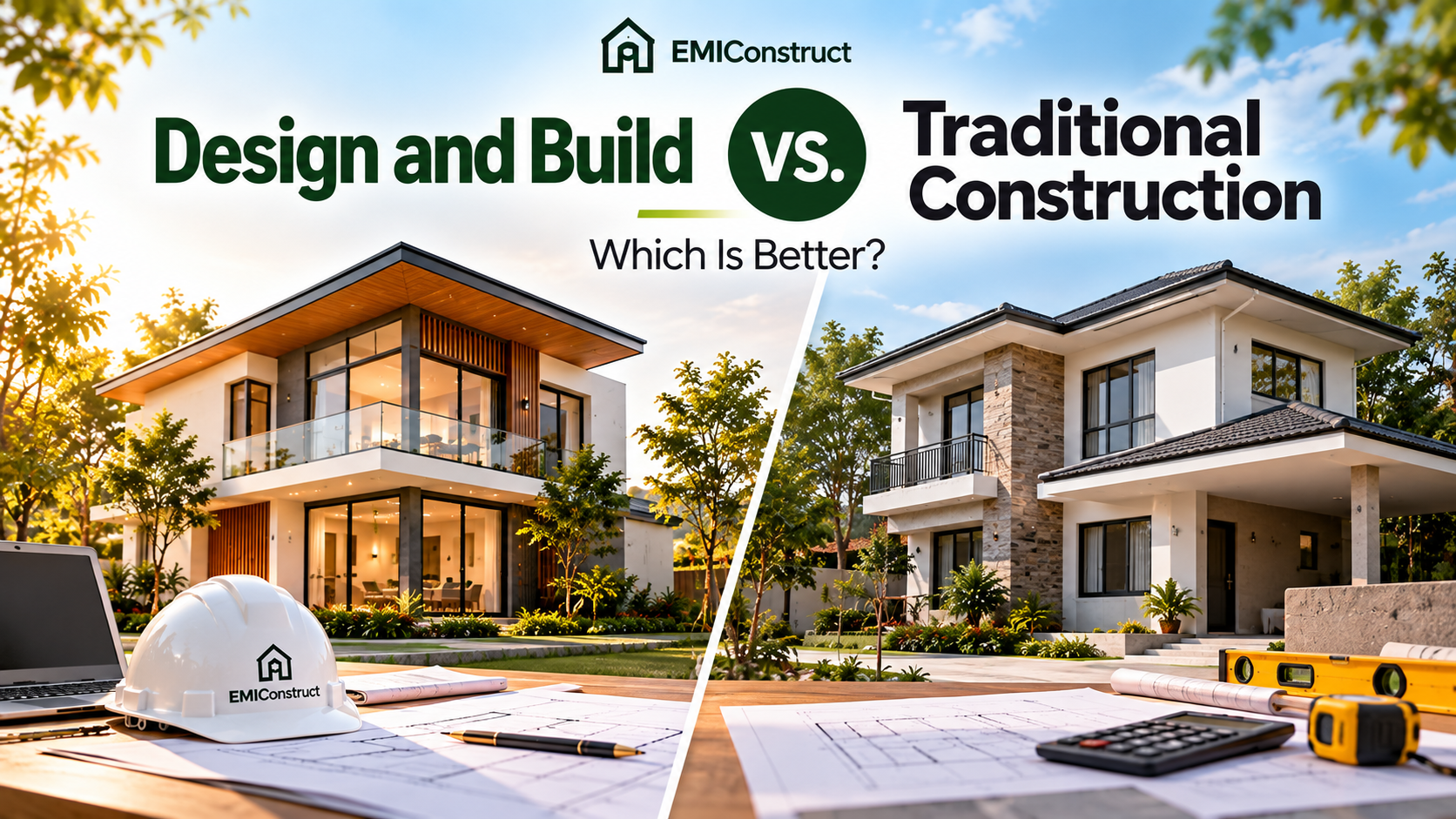

One of the earliest choices in a new home project is how design and construction will be organized. Should you work with an architect and then hire a contractor, or choose a team that coordinates both stages?
Understanding design and build vs. traditional construction can help you make this decision without relying on broad promises about which approach is faster or cheaper. Both can deliver a well-built home when the roles, plans, contracts, and expectations are properly managed.
What Is Traditional Construction?
Under the traditional design-bid-build approach, a homeowner typically engages design professionals to develop the project documents before selecting a contractor to construct the house. The design team and building contractor usually have separate agreements with the owner.
This approach can give homeowners a distinct design relationship and an opportunity to compare construction bids against a developed set of plans. It may appeal to owners who want substantial design exploration or independent professional oversight.
The trade-off is that the homeowner may need to coordinate more parties, especially when questions arise about whether a requirement belongs to the design scope or the construction scope.
What Is Design and Build?
In a design-and-build arrangement, responsibility for design coordination and construction is generally brought together under one team or contractual structure. The precise arrangement varies, so it is important to read the agreement rather than assume that every company offers the same services.
The potential benefit is earlier collaboration between design and construction personnel. Material selections, buildability concerns, and budget decisions can be discussed while the design is being developed. However, a single point of contact does not automatically mean better coordination or a guaranteed project price.
Homeowners should ask who prepares and signs the professional documents, what stages are included, and whether design revisions are charged separately.
Compare Cost Visibility Rather Than Marketing Claims
In traditional construction, contractors often price a relatively complete design. This can support direct comparison when the bids cover the same scope, but changes after award may still generate added costs.
In design and build, early discussions may reveal construction implications before the design is finalized. The initial estimate may still be preliminary, especially while drawings, materials, and site investigations remain incomplete.
For either approach, request clarity on allowances, exclusions, contingency, payment milestones, and the process for approving changes. A low initial number is less useful than a realistic estimate with a documented scope.
Consider Design Control and Independence
A homeowner who wants to explore several architectural concepts may value a separate design engagement. An owner prioritizing fewer handoffs may prefer an integrated arrangement.
Neither choice should reduce the need for qualified professionals, approved drawings, proper supervision, or appropriate inspections. If independent checking is important to you, ask how design reviews and construction quality checks will be performed.
Look Closely at Schedule Responsibilities
Design and build can allow some procurement planning to overlap with design development, where appropriate. Traditional construction often follows a more distinct sequence of design, bidding, and construction.
Actual schedules depend on site readiness, project complexity, approvals, procurement, and the timing of client decisions. Ask each potential team for a schedule that identifies design deliverables, approval stages, construction milestones, and decision deadlines.
Questions to Ask Before Choosing
Ask who will coordinate design changes, who is contractually responsible for construction outcomes, whether drawings and specifications are included in the fee, and what happens if the project exceeds the target budget. Also ask what documentation you will receive if you decide not to proceed to the construction stage.
The answers matter more than the label placed on the service.
Which Approach Is Right for You?
Choose based on your project’s complexity, the amount of involvement you want, the need for independent design oversight, and the clarity of each proposal. A straightforward home with well-defined priorities may work under either model; a highly customized project may require additional design review regardless of procurement method.
Before committing, compare a written scope, deliverables, responsibilities, and change-order process. EMIConstruct can be contacted to discuss your proposed project and clarify the construction information needed to evaluate your options.